How Apps Hijack Your Attention: 6 Addictive App Features
Dec 23, 2025 by Vreny Blanco · 12 min read · Digital Wellness, Focus
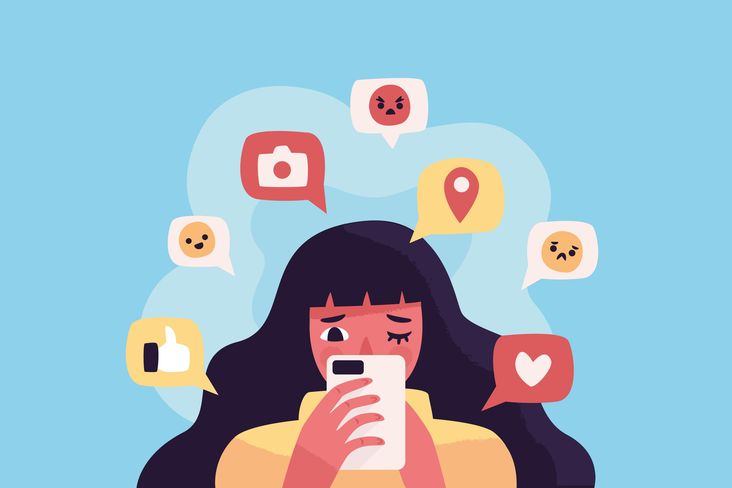
You pick up your phone to check “one quick thing”—a single email, a bus schedule, the weather. Twenty minutes later, you look up, emerging from a trance, with no memory of what you originally intended to do. You have been scrolling, clicking, and watching, lost in a digital rabbit hole.
If this experience feels familiar, you are not alone. This feeling of lost time and focus is the result of intentional, carefully crafted design choices. Social media and Freemium game apps are built on a business model in which you pay for “free” services with your personal data. The longer you stay, the more they can collect, and the more valuable you become for targeted advertising.
A review in the International Journal of Environmental Research and Public Health analyzes several prominent social media/messenger apps and Freemium games and argues that many of them include built‑in features that prolong usage time, often aligning with classic psychological and economic mechanisms (Montag et al., 2019).
In this blog post, we are going to explore six psychological and economic mechanisms, described in that review, that many apps use to hijack your attention. By understanding how these mechanisms work and learning to spot them, you will have the information you need to develop your own coping strategies and countermeasures, so you can regain more control over your time and attention.
Subscribe to the 1Focus blog and keep learning with us: 1Focus Blog RSS.
🌀 1. Endless Scrolling and Autoplay
Features like endless scrolling on video platforms such as YouTube or the autoplay function on streaming services are designed to minimize natural stopping points. By automatically loading the next piece of content or providing a bottomless feed, these apps reduce moments in which you might naturally pause and decide whether to continue.
Why It Matters
This design leverages intermittent conditioning, turning your feed into something similar to a slot machine for content. From time to time, you encounter something rewarding (for example, an interesting or funny video), and this unpredictable reward schedule reinforces continued use.
At the same time, the immersive nature of these platforms can push you into a psychological state of flow. In other contexts, flow is a positive and highly productive state, when the difficulty of a task matches your abilities and you feel focused and in control. But in this case, the same mechanism is used against you: the app’s seamless, never‑ending stream of content creates an absorbing experience that comes with time distortion. You become so immersed that you lose track of time and your surroundings, which makes it harder to stop and prolongs your usage.
Spot It
Ask yourself:
- When you open an app with an endless feed or autoplay, do you set a clear point when you will stop—or do you usually keep going until you feel tired, guilty, or are forced to stop by something else?
- How often do you watch “just one more” video or scroll “just a bit further,” and then realize much more time has passed than you expected?
- Do you notice that you keep scrolling because every few posts or videos feel especially funny, interesting, or exciting—even if most of the content in between is not?
💼 2. Endowment Effect and Mere Exposure Effect
The endowment effect is the principle that we place a higher value on things we own or have invested effort in. For example, the time spent building a virtual farm in a Freemium game like “Hayday” makes that digital creation feel more valuable to you, even though it is only a virtual product. The more time you invest in constructing your virtual world, the harder it becomes to detach from the game or delete the app, especially if progress has been slow and effortful.
Mere Exposure Effect
Montag et al. also highlight the mere exposure effect: repeated exposure can make you like something more, even if it started out neutral. The more often you are exposed to a certain game or app, the more you tend to like it. Over time, frequently opened apps can start to feel like your natural “default,” simply because you encounter them so often.
Why It Matters
We often do not think of digital items as “possessions,” but the same psychological processes apply. The more time and effort you invest in customizing a virtual environment or advancing in a game, the more attached you feel to it, and the more difficult it becomes emotionally to step away. This makes continued use more likely, which in turn allows the platform to collect more behavioral data and monetize your activity.
Spot It
Ask yourself:
- Are there games, platforms, or other apps you feel you “cannot quit” mainly because you have already built something there—levels, collections, a virtual world, or a long history—rather than because you still genuinely enjoy using them now?
- Do you notice that certain apps have become your automatic “default” when you feel bored, stressed, or between tasks, simply because you open them so often?
👥 3. Social Pressure
Apps frequently use features that create subtle social pressure. The “double tick” function in WhatsApp is a classic example. When ticks turn from gray (delivered) to blue (read), both the sender and receiver are aware of the message status, which creates an unspoken social expectation for a fast reply. As both sides know how this works, social pressure emerges—especially when it is clear that the message has already been read.
This pressure is not limited to messaging. In massively multiplayer online role‑playing games like World of Warcraft, players join “guilds” that schedule group missions (“raids”). Performance depends on everyone being present, which creates strong social pressure on individuals to be online at specific times in order not to let down the group. Over time, this can shift a person’s focus more toward online obligations and away from potentially more important offline activities.
Montag et al. also emphasize the power of defaults. In WhatsApp, for example, the read‑receipt feature (double ticks) is activated by default, and most users do not know they can deactivate it. This reflects a broader principle: when features are turned on by default, only a small percentage of users ever change the settings, so default configurations can strongly shape behavior.
Why It Matters
These mechanisms are a form of “nudging”: they gently steer users toward faster and more frequent communication, without any explicit demand to do so. Prior work cited by Montag et al. notes that this kind of social pressure can undermine well‑being and may contribute to rising social concerns around smartphone use, especially when it feeds into Fear of Missing Out (FoMO) and similar anxieties. Because such features are often enabled by default and rarely adjusted, they can create a loop of social obligation and frequent checking that serves the platform’s goal of maximizing engagement and data flow.
Spot It
Ask yourself:
- How often do you reply to messages faster than you really want to—just because you know the sender can see you have read them or is waiting for the double ticks to turn blue?
- Do you feel “behind,” anxious, or guilty if you do not respond immediately or are not online at the expected time, even when nothing truly urgent is happening?
- Have you ever checked whether features like read receipts, “last seen,” or online status are enabled by default—and asked yourself whether you actually want them on?
📰 4. Personalized Newsfeed
Your feed is personalized to be hard to leave.
The personalized Newsfeed on platforms like Facebook is powered by algorithms that study user behavior in detail. They track not only what you “like” (for example, giving a thumbs‑up) but also how long you hover over or pause on a post—signals that can be interpreted as special interest. Techniques such as text mining and sentiment analysis enable platforms to infer what topics you care about and even what mood you might be in. All this information is used to place content in your feed that is likely to be most interesting and engaging to you.
Why It Matters
The platform has a strong interest in preventing you from getting bored and closing the window or app. By carefully analyzing how you behave, it can fill your Newsfeed with posts that best match your interests, so you continue scrolling instead of stopping.
Your attention is not only responding to the quality of individual posts; it is responding to content selection that has been optimized around your observed preferences and behavior. This personalization increases the time you spend on the platform, which in turn allows the service to collect more data and use it for more effective microtargeting and advertising.
Spot It
Ask yourself:
- When you open a social app, do you usually go in with a specific purpose (for example, to look up one person or one piece of information)—or do you mainly end up consuming whatever appears first in your Newsfeed?
- Does “one quick check” of your feed regularly turn into a long, hard‑to‑end session, even when nothing in particular brought you there in the first place?
❤️ 5. Social Comparison and Social Reward
The “Like” button (or “hearts” on Instagram) is a powerful mechanism for social reward. Neuroscientific evidence cited by Montag et al. shows that receiving many Likes on one’s own posts activates reward centers in the brain, in particular regions of the ventral striatum that are involved in processing rewards. This helps explain why positive social feedback on platforms such as Instagram and Facebook can feel so compelling.
Why It Matters
This feature is more than just a way to feel good. It provides ongoing feedback about how one is perceived by others and ties directly into social comparison. Users can monitor how many Likes their content receives, compare this to previous posts or to others’ posts, or, in games, check high‑score boards to see how they rank. These cycles of comparison and reward can encourage people to return frequently and stay longer, which again increases the time available for data collection and targeted advertising.
Spot It
Ask yourself:
- How often do you open an app “just to see” whether there are new Likes, comments, followers, or a higher score—and then end up staying longer than you planned?
- Do you find yourself comparing the reactions to your posts (or your scores in games) with earlier posts or with other people, and feeling better or worse depending on how you “measure up”?
📌 6. Zeigarnik/Ovsiankina Effect
This is a two‑part psychological trap:
- The Zeigarnik effect states that we remember unfinished or interrupted tasks better than completed ones.
- The Rickers‑Ovsiankina effect builds on this, showing that we do not just remember these tasks—we often feel a strong tendency to return to them later and complete them in order to reduce the strain caused by interruption.
Why It Matters
Freemium games like Candy Crush Saga exploit these effects. The game includes levels that are labeled as “super hard,” where it is easy to fail and lose your limited “lives.” When you run out of lives, you are forced to stop playing, creating an interruption and emotional strain right before completing a difficult task.
According to the Zeigarnik and Ovsiankina effects, this unfinished state increases the likelihood that you will want to come back later and try again. In this context, one convenient way to continue immediately is to spend money on additional lives or energy. This design both prolongs usage time and supports the business model of in‑app purchases.
Spot It
Ask yourself:
- Do you notice yourself thinking about unfinished levels or tasks in games when you are supposed to be doing something else?
- When a game forces you to stop—because you ran out of lives, energy, or turns—do you feel a strong urge to come back as soon as you can, or even consider paying to continue immediately rather than leaving the task unfinished?
🖥️ How 1Focus Can Help
The features described above work by removing natural stopping points and adding subtle pressure to keep going. 1Focus cannot redesign your apps, but it can help you reintroduce simple, firm boundaries—especially on your Mac.
Think about:
- Which apps or sites pull you into endless scrolling or checking the most?
- At what times of day is it most important for you to stay focused and unreachable?
Here is a compact way to use 1Focus against the six mechanisms described before:
- Use 1Focus to block websites with infinite scrolling or autoplay (social feeds, video platforms) during work blocks. This creates external stopping cues where the apps remove them.
- Set up an allowlist so that, during focus sessions, only your essential work and study tools are available. This quietly reduces repeated exposure to the apps you want to step back from.
- Schedule recurring focus blocks (for example, weekdays 9–12 and 1–5) and include messaging and social apps in your blocked apps list. This helps you resist nudges like read receipts and “always on” expectations.
- Keep social platforms and their Newsfeeds blocked while you are working, and only allow them in short, pre‑planned windows.
Used this way, 1Focus becomes a straightforward counterweight to persuasive design: it gives your attention clear boundaries, so your daily choices can align more closely with what you actually want to get done.
🎯 Takeaways
- Your attention is not limitless; it is a valuable resource to invest intentionally.
- Feeling “hooked” is often linked to business models that benefit from longer and more frequent use.
- Many apps and games use known psychological and economic mechanisms to keep you engaged; this does not make them bad, but their incentives may not match your goals.
- Awareness of these design patterns helps you shift from passive use to more intentional, active choices.
- As Montag et al. (2019) show, features like endless scrolling, autoplay, social pressure signals, personalized feeds, Like‑based rewards, and unfinished tasks can prolong usage time. Because of this, willpower alone is often not enough; adding clear boundaries, stopping cues, and your own “defaults” gives your attention something stronger than impulse to rely on.
📚 Keep Reading
What a Scientific Review Reveals About Digital Addiction
This article is not sponsored; no compensation was received for its creation. It reflects the author’s personal interpretation of the cited research and her own experience and opinions. It is provided for informational purposes only and is not a substitute for professional medical advice, diagnosis, or treatment.