Why Feeling Left Out Makes You Scroll More
Feb 26, 2026 by Vreny Blanco · 7 min read · Digital Wellness, Focus
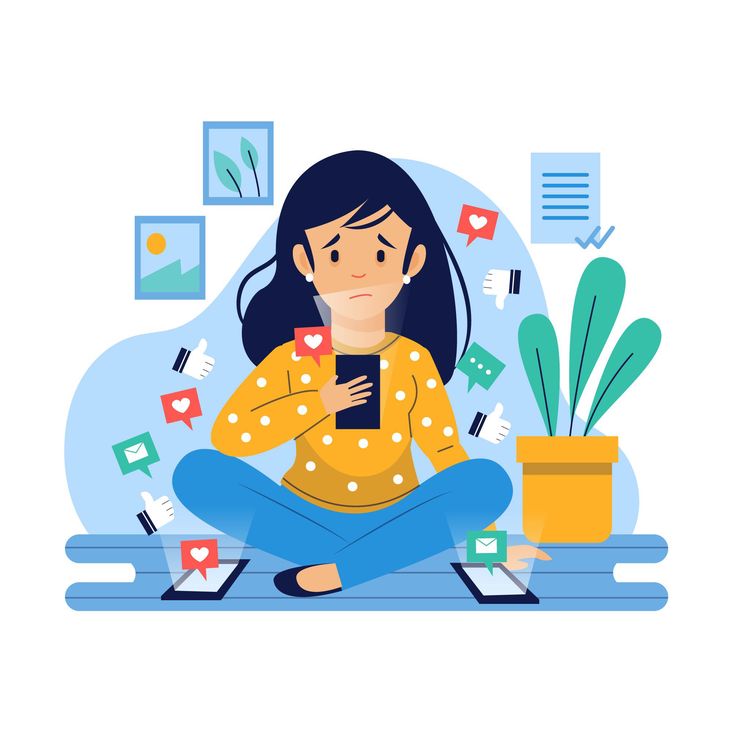
Have you noticed how a single unanswered message—or seeing friends interact without you online—can pull you into “just checking” social media more?
Maybe you’re not even posting. You’re just… watching. Refreshing. Catching up. Making sure you didn’t miss something.
A 2019 study examined how feeling socially excluded on Facebook relates to Facebook addiction-like symptoms, and why surveillance use (using Facebook to monitor another person’s profile or updates) might be the bridge between the two—especially for people higher in narcissistic grandiosity.
The study focused on participants’ behavior on Facebook. Even if you do not use this particular platform, the patterns it describes will feel familiar to many of us across social media in general. Below are what I consider the key findings of this paper.
Subscribe to the 1Focus blog and keep learning with us: 1Focus Blog RSS.
1️⃣ Feeling Excluded and Facebook Addiction
In this study, higher social exclusion on Facebook was associated with more Facebook addiction symptoms. In other words, the more people felt ignored, avoided, or shut out by a specific Facebook friend, the more likely they were to report that Facebook was interfering with their sleep, work, or offline life.
Why it matters for focus/learning: Feeling excluded can drive “quick reassurance” behaviors like checking Facebook, which fragments attention and can crowd out deeper work.
2️⃣ Exclusion and “Surveillance” Behavior
Social exclusion wasn’t just tied to spending more time on Facebook. It was tied to monitoring a specific person more closely.
What it means: In the study, higher social exclusion on Facebook was linked to higher surveillance use. In everyday terms, the more people felt that a particular Facebook friend (“X”) might ignore, avoid, or shut them out, the more they reported keeping tabs on that person’s profile and updates.
Why it matters: This kind of surveillance is low-effort and very repeatable (“just one more check”), which makes it easy to slip into during study breaks—and hard to stop once it becomes a habit.
3️⃣ Surveillance Use and Facebook Addiction Symptoms
Higher surveillance use was associated with more Facebook addiction symptoms. In other words, the more people reported closely watching a specific person’s profile and updates, the more likely they were to say Facebook was disrupting their sleep, work, or offline activities.
Why it matters: These monitoring behaviors are not neutral. They often do not resolve uncertainty—they can fuel it, keeping your mind in “open loop” mode and making it harder to disconnect and focus.
4️⃣ Surveillance as a Bridge Between Exclusion and Addiction
One pathway looked like this:
feeling excluded → more surveillance use → more Facebook addiction symptoms
In the study’s analysis, feeling excluded was linked to more surveillance use, and more surveillance use was linked to more addiction-like use. Together, this formed a meaningful indirect path between exclusion and addiction through surveillance.
Why it matters: If you want to change the habit, you may get more traction by targeting the middle step (surveillance behaviors) rather than only trying to “use less Facebook” in general.
5️⃣ Narcissistic Grandiosity and Exclusion
People higher in narcissistic grandiosity showed a stronger relationship between social exclusion and addiction-like Facebook use.
What it means: For people who are more focused on admiration, image, or attention, feeling excluded by a Facebook friend was more strongly tied to reporting that Facebook was interfering with their sleep, work, or offline life.
Why it matters: Two people can have the same “nobody liked my post” moment, but the spiral into compulsive checking may be much more intense for someone who is especially invested in being noticed and admired.
🧩 Key Concepts
Social Exclusion (On Facebook)
Worrying that a specific person might ignore you, avoid you, or shut you out. In the study, participants first thought of one Facebook friend (“X”) and then rated how likely it felt that X might exclude them (for example, treating them as if they were not there).
Surveillance Use
Passive monitoring—checking someone’s profile, paying close attention to their updates, and keeping tabs on what they do on Facebook without necessarily interacting with them directly.
Facebook Addiction (In This Study)
Self-reported signs that Facebook use is interfering with life (for example, sleeping less because of Facebook, work or grades getting worse, preferring Facebook over other activities, or feeling like you live a “virtual” life).
Narcissistic Grandiosity
A personality tendency toward attention-seeking and self-promotion (for example, “I like to be the center of attention” or “I like to show off”), measured here as a subclinical trait—a continuum in the general population, not a clinical diagnosis.
🖥️ How 1Focus Can Help — Blocking Options on Mac
If your pattern is “I feel excluded → I start monitoring → I lose an hour,” tools that add friction can help you stay in control.
Here are some ways to interrupt this pattern using 1Focus on your Mac:
- Block Facebook during study blocks so surveillance can’t sneak into deep work.
- Use an allowlist for only what you need (course sites, docs, email) during focus time.
- Schedule short focus sprints (e.g. 25 minutes) and give yourself a planned break—so scrolling does not become the break that never ends.
- Add a time window for social apps (so connection is intentional, not reflexive).
🚀 Takeaways
Here’s what this study suggests—and how it might show up in your own social media use (not just on Facebook):
When people felt more left out or ignored on Facebook, they were more likely to say that Facebook was messing with their sleep, work, or offline life. If you’ve ever had a “why wasn’t I included?” moment and then found yourself stuck in an endless scroll, you’ve felt a version of this.
Feeling excluded also went hand in hand with “checking up” on one specific person more often—visiting their profile, reading every update, quietly keeping tabs. The more people did this kind of checking, the more trouble they reported with pulling themselves away from Facebook. For people who really care about being noticed or admired, feeling left out seemed to hit even harder.
The study can’t tell us what causes what, but it does map out a pattern many of us recognize across social media in general:
feeling excluded → checking up on people more → feeling more stuck to the app
If that sounds familiar, it might help to focus less on “I should use social media less” and more on very specific habits—especially the urge to keep checking what certain people are doing. Reaching out to someone directly, or setting clear limits around when you open social apps, can make it easier to step out of that loop.
If willpower or self-control are hard to rely on alone, extra support can be a useful temporary solution. One effective way to prevent yourself from checking social media on your Mac is to use 1Focus. You can combine this with other measures—a “kitchen safe” box for your phone, a solid routine, and, if you need password protection and stronger restrictions on your device, you can use Parental Control.
📚 Keep Reading
What a Scientific Review Reveals About Digital Addiction
This article is not sponsored; no compensation was received for its creation. It reflects the author’s personal interpretation of the cited research and her own experience and opinions. It is provided for informational purposes only and is not a substitute for professional medical advice, diagnosis, or treatment.