How the Way You Use Your Smartphone Affects Your Mood and Focus
May 28, 2026 by Vreny Blanco · 5 min read · Digital Wellness
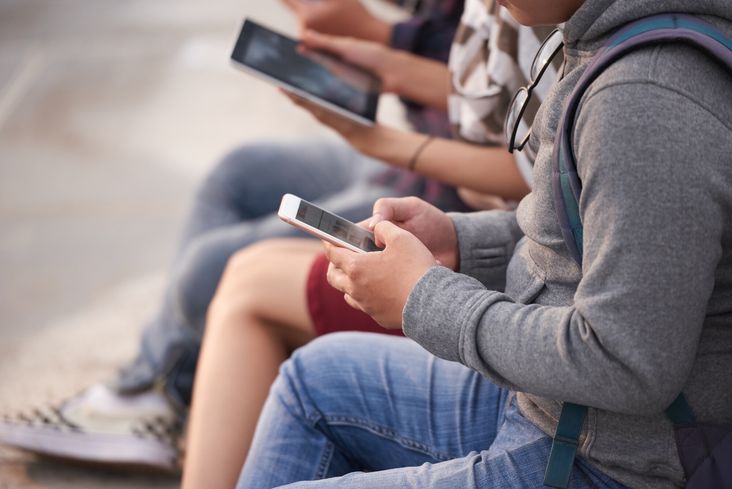
Have you noticed that some ways of using your smartphone leave you tired or in a low mood, while others feel more neutral or even helpful?
A study by Jinhee Lee and colleagues, based on data from 62,276 adolescents aged 12–18 years, examined how the main purpose of smartphone use relates to subjective stress, depressed mood, suicidal ideation, smartphone overuse, and adverse consequences related to smartphone use.
This blog post summarizes the key results and offers practical suggestions for recognizing potentially risky digital habits.
Subscribe to the 1Focus blog for more evidence-based advice: 1Focus Blog RSS.
📱 Smartphone Habits
The research team grouped students’ main smartphone use into four categories:
- Study: Using the phone primarily for studying.
- Social-Networking Services (SNS): Messaging and chat, online communities, and social networks.
- Game: Playing games on the smartphone.
- Entertainment: Watching movies, reading comics or fiction, listening to music, and creating user-created content and videos.
Students were asked to choose one main service they used most on their smartphone in the last 30 days.
🧾 What Did the Study Find?
1. Social-Networking Services
- Adolescents who mainly used social-networking services (25.9%) had the highest prevalence of depressed mood and suicidal ideation among the four groups.
- The SNS group also spent the most time on smartphones, averaging about 5.4 hours per day on school days.
- They reported more adverse consequences related to smartphone use, including conflicts with family members, conflicts with friends, and poorer academic performance due to smartphone use.
- The SNS group also had a higher prevalence of high subjective stress and current alcohol drinking than the other groups.
- This group had a higher proportion of girls and a lower rate of physical activity than the other groups.
2. Games
- Adolescents who mainly used their smartphones for games (18.5%) had the lowest proportion of depressed mood and suicidal ideation among the four groups.
- The Game group spent an average of about 4.1 hours per day on smartphones on school days. Even so, they had more than twice the odds of smartphone overuse compared with the Study group, with overuse defined as more than 5 hours per day.
- In the Game group, 48.1% reported poor academic performance due to smartphone use, which was higher than in the Study group (43.0%).
- The Game group was more likely to be younger, male, living in rural areas, and sleeping less than 6 hours.
3. Entertainment
- Adolescents who mainly used their smartphones for entertainment (44.9%)—such as watching movies, listening to music, reading comics or fiction, or creating user-created content and videos—had higher odds of smartphone overuse than the Study group.
- The Entertainment group spent an average of about 4.3 hours per day on smartphones on school days.
- They also reported poor academic performance due to smartphone use more often than the Study group, but less often than the SNS group.
- The Entertainment group had a higher prevalence of low family economic status compared to the other groups.
4. Academic Use
- The Study group (10.7% of students) had the lowest average smartphone use time, at about 3.0 hours per day on school days.
- They also had the lowest rates of conflicts with family members, conflicts with friends, and poor academic performance due to smartphone use.
- They were more likely to be older, live in large cities, and have a higher family economic status.
❗️ What You Can Take Away From This
This study was correlational. It cannot prove that using social apps causes depression or other problems. However, the results showed that the SNS group had higher rates of depressed mood and suicidal ideation than the other groups, along with higher addiction propensity, including overuse and adverse consequences of smartphone use.
What does this mean for you?
- Not all screen time is equal. In this study, the main purpose of smartphone use was related to different patterns of overuse and psychological characteristics.
- The study found a relationship between mental health and SNS use, with the SNS group showing higher levels of depressed mood, suicidal ideation, and subjective stress than the other groups.
- Paying attention to your main reason for using your smartphone may help you recognize patterns related to mood, overuse, and daily functioning.
- In this study, the SNS group showed the strongest associations with smartphone overuse, depressed mood, suicidal ideation, and subjective stress among the four content types.
🖥️ Applying These Insights With 1Focus on Your Mac
This study suggests that the main purpose of smartphone use may matter for daily functioning and patterns of overuse. 1Focus can help you apply these insights in everyday life by:
- Blocking or limiting access to specific websites and apps during study or work periods, especially if social networking or entertainment tends to become your default behavior. See: Block Distracting Websites on Mac and Block Apps on Mac
- Scheduling focused sessions so that study or work is more likely to remain your main activity during key hours. See: Schedule Blocking
- Reducing unplanned switching to social or entertainment content, which in the study was associated with more overuse and more reported academic difficulties than study-focused use. See: How to Program Limited Access to Distracting Content
By shaping your digital environment, you can support more consistent focus and healthier digital habits across both smartphone and computer use.
📚 Keep Reading
This article is not sponsored and reflects the author’s interpretation of published research, with the aim of sharing useful patterns and actionable insights for readers interested in digital wellbeing. It is not a substitute for professional mental health or medical advice.